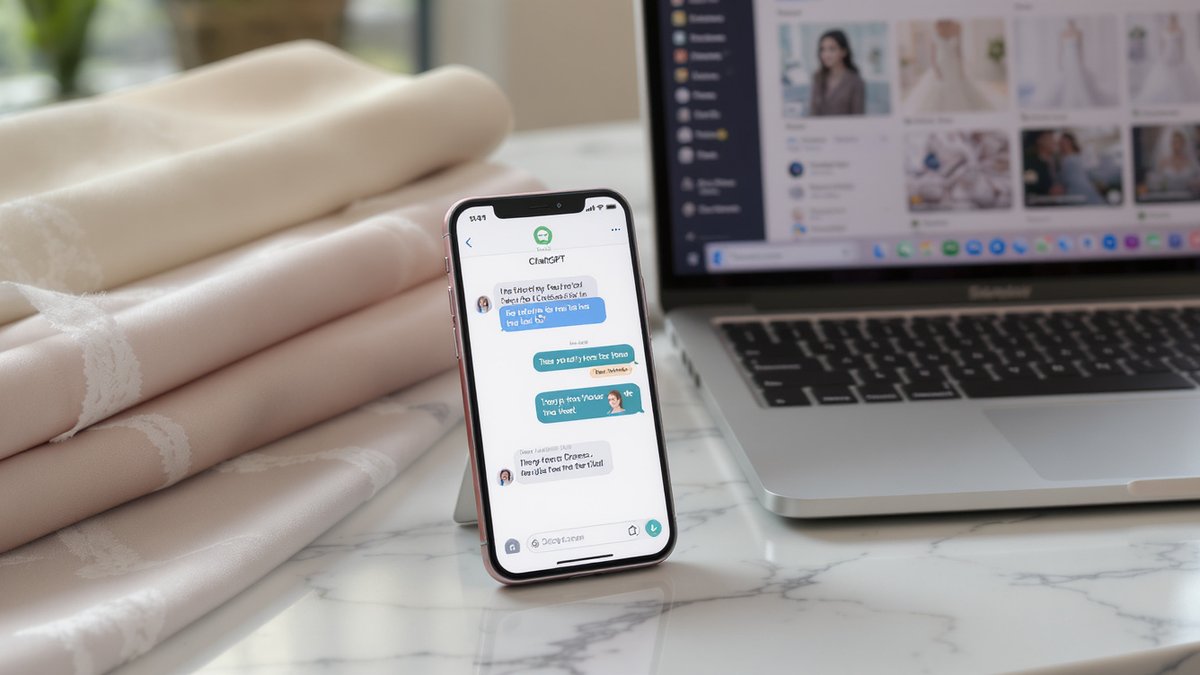
The moment we've been tracking just became real. Digital Commerce 360 reported today that David's Bridal has integrated its Shopify storefront directly into ChatGPT and Microsoft Copilot, allowing shoppers to browse and purchase wedding dresses inside AI chat interfaces without ever visiting a traditional website. Not "click here to visit our store." Not "redirecting you to checkout." Actual commerce, completed conversationally, within the AI platform itself.
This isn't a pilot. It's not experimental. David's Bridal is using Shopify's new "agentic storefronts" feature to make AI platforms direct sales channels—the first clear example of what we called the agentic commerce shift when American Express built payment infrastructure for AI shopping agents just three days ago.
If you're running a physical product brand on Shopify and you're not preparing for AI platforms as direct commerce endpoints, you're treating a fundamental channel shift like it's a future prediction. It's happening now. The infrastructure is live. Consumers are already shopping this way.
And today's news proves something bigger: AI platforms aren't just changing how consumers discover products—they're changing where consumers buy products.
From AI Discovery to AI Commerce: The Channel That Just Opened
Let's be clear about what changed. Until now, AI platforms functioned as advanced search engines. ChatGPT might recommend products. Google's AI Mode might suggest brands. But the transaction still happened on your website, on Amazon, or through a traditional checkout flow.
David's Bridal just proved that model is over.
With Shopify's agentic storefronts, a consumer can now ask ChatGPT: "I need a wedding dress for a beach ceremony in September, budget around $1,500, something that photographs well." ChatGPT pulls product data directly from David's Bridal's Shopify catalog, recommends specific dresses with images and pricing, answers follow-up questions about sizing and alterations, and facilitates the entire purchase—all within the chat interface.
No website visit. No bounce rate. No abandoned cart recovery email needed.
This is agentic commerce: AI platforms as direct sales channels, not just traffic sources.
And if you think this only matters for specialty retailers like David's Bridal, you're missing the pattern. Google just updated AI Mode in Chrome to open web pages side-by-side with search results and pull context from open tabs, according to Shopifreaks. Consumers can now compare products across multiple tabs while asking AI contextual questions without losing their place.
Meanwhile, Tesco announced an all-in partnership with Adobe to deploy agentic AI across its digital channels, using Adobe Firefly to personalize content and offers for individual shoppers through its Clubcard loyalty program. And as Grocery Dive reported, grocers including Kroger and Albertsons are making AI-powered personalization and recommendations core infrastructure across their entire operations.
The theme is consistent: AI isn't augmenting traditional ecommerce channels—it's replacing them for an increasing share of product discovery and purchase behavior.
Why Independent Brands Win in Agentic Commerce (If They Prepare Now)
Here's the contrarian take: this shift favors independent DTC brands more than it favors Amazon or traditional marketplaces.
Why?
Because agentic commerce rewards brands that own their product data and customer relationships, not brands that outsource product discovery to a marketplace algorithm.
When a consumer asks ChatGPT for a product recommendation, the AI agent doesn't browse Amazon's marketplace—it queries structured data from brands that have made their catalogs AI-accessible. Shopify merchants who integrate with ChatGPT get direct access to that conversational commerce channel. Amazon listings optimized for marketplace search don't automatically appear in AI agent recommendations unless Amazon itself builds the integration.
That's the opportunity: AI traffic to ecommerce sites surged 393% in Q1 2026, and the brands capturing that traffic are the ones who structured their product data for AI discoverability—not the ones who assumed Google Shopping and Amazon PPC would carry them forever.
Independent brands on Shopify, WooCommerce, or BigCommerce control their product schema, their content structure, and their catalog metadata. That control is what makes agentic storefronts possible. Marketplace sellers renting shelf space from Amazon don't have the same flexibility.
But—and this is critical—you only win if you prepare your product data now, before this channel becomes saturated.
The Infrastructure Play Behind Agentic Commerce
David's Bridal didn't build this integration themselves. Shopify built the infrastructure. That's the signal.
Shopify is betting that AI platforms become major commerce endpoints, and they're building the rails to connect their merchants directly to ChatGPT, Copilot, and whatever AI agents emerge next. This is the same strategic positioning Salesforce executed when they turned ChatGPT into a sales channel earlier this month.
For Shopify merchants, this is a massive advantage. The platform is doing the heavy lifting to make your catalog AI-accessible. But you still need to do your part: rich product data, structured content, comprehensive attributes, and FAQ content that AI agents can parse and use to confidently recommend your products.
For brands on WooCommerce or BigCommerce, the play is similar but requires more manual integration. You'll need to implement product schema markup, maintain detailed metadata, and potentially use third-party tools to make your catalog accessible to AI platforms as they open up API access.
The brands that treat this like "something to think about later" will miss the early mover advantage entirely. The brands that optimize product data this month will be the ones AI agents confidently recommend when consumers ask for product suggestions in their category.
What to Do This Week: Tactical Steps for DTC Brands
This isn't abstract strategy. Here's what you execute before next Friday:
1. Audit Your Shopify Product Data for AI Readiness
If you're on Shopify, you're one integration away from agentic storefronts. But only if your product data is rich enough for AI agents to parse and recommend.
Open Shopify Admin → Products. For your top 20 SKUs, check:
- Product descriptions: Are they detailed and conversational, answering common customer questions directly? Or are they keyword-stuffed summaries? AI agents prefer natural language that anticipates shopper questions.
- Product attributes: Have you filled out all available metafields—materials, dimensions, care instructions, use cases, compatibility? AI agents use this structured data to match products to customer needs.
- Images: Do you have multiple high-quality product images with descriptive alt text? AI agents increasingly use image context to understand product details.
- Reviews and FAQ: Are customer reviews visible and detailed? Do you have an FAQ section on product pages? AI agents cite reviews and FAQs when recommending products.
Fix the gaps this week. The brands with comprehensive product data get recommended. The brands with thin content get skipped.
2. Implement Product Schema Markup Across All Product Pages
Whether you're on Shopify, WooCommerce, or BigCommerce, structured data is the foundation of AI discoverability.
Use Schema.org Product markup to define:
- Product name, description, SKU, brand
- Price, currency, availability status
- Review ratings and review count
- Product attributes (color, size, material, etc.)
- FAQ content in FAQPage schema
If you're on Shopify, apps like Schema Plus or SEO Manager can automate this. If you're on WooCommerce, plugins like Rank Math or Yoast handle schema implementation. BigCommerce merchants can add schema through custom HTML in product page templates or use apps from the marketplace.
AI agents prioritize products with machine-readable structured data. This isn't optional anymore.
3. Rewrite Product FAQs as Conversational Q&A That AI Agents Can Cite
AI agents don't browse your website—they extract specific answers to user questions from structured content.
Go to your top product pages and add or revise FAQ sections. Format them as clear question-and-answer pairs that directly address what customers ask:
- "What materials is this product made from?"
- "Is this product suitable for sensitive skin?"
- "How does this product compare to [competitor product]?"
- "What's the return policy for this item?"
- "Can this be used outdoors?"
Use <details> and <summary> HTML tags for user experience, and implement FAQPage schema so AI agents can parse the content. This is the content AI agents will cite when recommending your product over a competitor's.
BloggedAi's approach is built on exactly this foundation: creating schema-rich, AI-discoverable content that positions your products to be recommended by AI agents across every platform. The brands that structure content this way don't just rank in traditional search—they get cited by ChatGPT, Copilot, and Google's AI Mode when consumers ask for product recommendations.
4. Monitor Where Your Products Appear in AI-Powered Search Results
Start testing how AI platforms surface your products right now.
Open ChatGPT, Google's AI Mode, and Microsoft Copilot. Ask product-related questions in your category:
- "What's the best [product type] for [specific use case]?"
- "I need a [product] that [solves specific problem]. What do you recommend?"
- "Compare [your product] to [competitor product]."
Do your products appear? Are competitors mentioned instead? What product details do the AI agents cite—reviews, specs, FAQ content?
This audit tells you where you stand in the agentic commerce channel. If your products don't appear, you have a discoverability problem that needs immediate attention. If they appear but competitors are recommended first, you need richer product data and more authoritative content.
5. Set Up Email Flows That Capture Customers Who Discover You Through AI Platforms
As AI-driven traffic increases, you need infrastructure to convert those shoppers into owned relationships.
In Klaviyo, Omnisend, or your email platform, create a dedicated welcome series for customers acquired through non-traditional channels. Tag customers who arrive from referral sources outside Google/Meta/Amazon, and send a tailored onboarding flow that:
- Confirms their purchase and sets delivery expectations
- Educates them on product use and care
- Invites them to join your SMS list for exclusive offers
- Encourages them to leave a review (which feeds back into AI discoverability)
The goal is to turn a one-time AI-driven purchase into a long-term customer relationship you own, not one mediated by an AI platform.
The Broader Pattern: Retail Infrastructure Is Rebuilding Around AI
David's Bridal making ChatGPT a sales channel isn't an isolated development. It's part of a broader infrastructure shift where every layer of retail—from pricing to fulfillment to product discovery—is being rebuilt with AI as the default interface.
Modern Retail reported today that major retailers like Kroger and Walmart are expanding electronic shelf labels that enable dynamic pricing changes in real-time. These aren't just digital price tags—they're infrastructure for AI-optimized pricing that adjusts based on demand, competition, and customer behavior.
For CPG brands, this means increased pricing volatility and the need to monitor retail pricing more closely, as retailers gain flexibility to optimize margins instantly.
Meanwhile, Home Depot acquired warehouse automation firm Simpl Automation to boost fulfillment speed, UPS deployed RFID tracking across its entire U.S. network for automatic package sensing, and Uber launched doorstep returns pickup as part of its everything-app strategy. Every piece of logistics and fulfillment infrastructure is getting faster, more automated, and more transparent—raising baseline consumer expectations for delivery speed and tracking accuracy.
And while all this infrastructure modernizes, Walmart announced it's giving its Great Value private label brand its first major redesign in over a decade, acknowledging that shoppers didn't feel proud displaying the products. As Grocery Dive reported, this signals that private labels are evolving from value alternatives to premium, aspirational brands—intensifying competition for branded CPG products across all channels.
The throughline: AI is the orchestration layer for pricing, fulfillment, personalization, and product discovery. The brands that integrate with AI infrastructure win. The brands that treat AI as a peripheral concern get priced out, out-fulfilled, and out-discovered.
What This Means for Independent Brands in 2026
If you're an independent ecommerce brand operator, here's the reality: the commerce landscape is fragmenting into AI-native channels faster than most brands are prepared for.
Traditional acquisition channels—Google Shopping, Facebook/Instagram ads, Amazon PPC—still work. But they're getting more expensive and less effective as consumer behavior shifts toward AI-powered discovery.
The brands that win in the next 24 months are the ones who build for multi-channel AI discoverability right now:
- Shopify merchants who optimize for agentic storefronts and make their catalogs accessible to ChatGPT, Copilot, and emerging AI agents
- WooCommerce and BigCommerce brands who implement comprehensive product schema and structured FAQ content that AI platforms can parse
- CPG brands who treat AI-powered grocery platforms and retail media networks as primary channels, not afterthoughts
- DTC brands who own their customer data and relationships, not brands locked into marketplace dependency
The infrastructure is live. The channel is open. The brands that act this month will be the ones AI agents confidently recommend six months from now when your competitors finally realize what's happening.
Frequently Asked Questions
What are Shopify agentic storefronts and how do they work?
Shopify agentic storefronts are integrations that allow AI platforms like ChatGPT and Microsoft Copilot to directly access your Shopify product catalog, enabling consumers to browse and purchase products within AI chat interfaces without visiting your website. The AI agent pulls product data from your Shopify store and facilitates transactions conversationally, creating an entirely new sales channel where discovery and purchase happen within the AI platform itself.
How should DTC brands optimize product data for AI-powered shopping?
DTC brands should structure product data with comprehensive attributes, detailed descriptions, FAQ content, and customer reviews in machine-readable formats. Use schema markup on product pages, maintain detailed product metadata in Shopify or your ecommerce platform, and ensure product information answers common customer questions directly. AI agents prioritize products with rich, structured data that helps them confidently recommend items to shoppers.
What is the difference between AI discovery and AI commerce channels?
AI discovery channels help consumers find products through AI-powered search and recommendations but redirect them to traditional websites or marketplaces to complete purchases. AI commerce channels like ChatGPT with Shopify integration allow consumers to complete the entire shopping journey—discovery, comparison, and purchase—within the AI interface itself, making AI platforms direct sales endpoints rather than just traffic sources.
Should independent ecommerce brands prioritize AI platforms or traditional search optimization?
Independent brands must optimize for both simultaneously, as consumer behavior is fragmenting across traditional search engines and AI platforms. The foundation is the same—rich product data, structured content, and comprehensive product information—but AI platforms reward conversational content and direct answers to customer questions more than traditional keyword optimization. Brands that structure data once for AI discoverability win across both channels.
The Question That Determines Your Next Move
Here's what keeps me up: how many DTC brands will treat this like every other platform shift—waiting until the channel is saturated, the early movers have claimed position, and the cost of entry has tripled?
We saw it with Amazon. We saw it with Instagram Shopping. We saw it with TikTok Shop. The brands that moved early built sustainable advantages. The brands that waited paid premium acquisition costs to catch up.
Agentic commerce is the same pattern, but the timeline is compressed. Shopify merchants have infrastructure access today. AI platforms are opening commerce APIs now. The brands optimizing product data this week will be the ones AI agents recommend by default this summer.
The question isn't whether AI platforms become major commerce channels. David's Bridal just answered that.
The question is whether you're prepared when they do.
Want to see how your product pages perform in AI search? Try BloggedAi free → https://bloggedai.com